Stock and billing software
Gayatri Industries trades steel pipes, sheets and fittings in a small Indian city. We built the system the whole business runs on, from goods coming in to the owner's reports. Live since December 2024, with support renewed to September 2027.
- Stock and accounts
- Steel trading
- Hindi labels
The problem
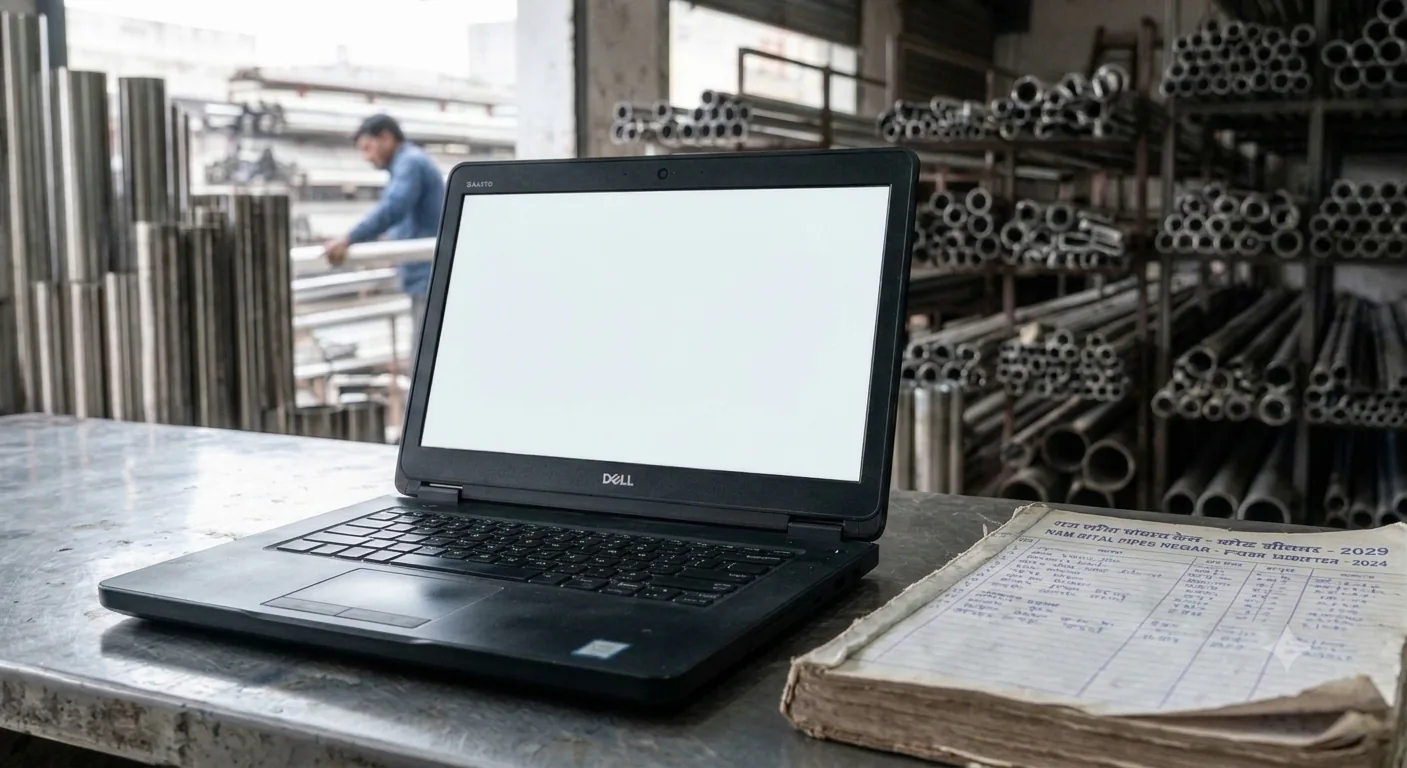
Steel pipes are sold by grade, size and gauge, by weight or by the piece, and fittings and polish items by count. What was in stock, who owed what, which supplier was still to be paid, and whether a sale really made money all lived in a ledger book and a calculator.
How it works, end to end
Goods in
What we builtPurchases come in from an Excel sheet per item type or are entered once from the supplier's bill. Stock goes up by weight and by pieces, and the real cost per unit is worked out with freight, discount and TCS included.
What it changed: The owner knows what each pipe really cost.
Stock, live
What we builtPipes by grade, size and gauge, plus sheets, fittings and polish items, each on its own tab, with item codes made automatically and a price history for every item.
What it changed: A customer's question about a size is answered from the screen, not the racks.
The sale
What we builtA sales bill takes the goods out of stock as it's made, with the margin on every line, discounts, extra charges and a preview before saving. The bill prints as a GST tax invoice or a simple bill, and a warning shows when a customer goes past their credit limit.
What it changed: The owner sees the profit on every sale.
Money in
What we builtPayments, part payments and advances are recorded on the bill or the customer's account, split across cash, bank and UPI. A cancel or a return, with or without a bill, puts the goods back in stock and credits the customer.
What it changed: Every bill shows what's paid and what's still due.
Accounts, both ways
What we builtEvery customer and supplier has a running account, with numbered supplier payments and an account statement PDF that shows how long each amount has been owed: 0 to 30, 31 to 60, 61 to 90 and 90+ days.
What it changed: What customers owe and what's still to be paid to suppliers sit on one screen, to the rupee.
Low stock
What we builtItems running low are counted and flagged on the dashboard.
What it changed: The owner can reorder a size before a customer has to be turned away.
The owner's reports
What we builtSales, money in, purchases and returns for any dates, profit by category and by customer down to each bill, a cash book, and an export that opens in Excel. The sales team sees none of it: logins for the owner and for sales staff are kept apart.
What it changed: The owner reads the business without a ledger book or a calculator, and the margins stay private.
In the owner's language
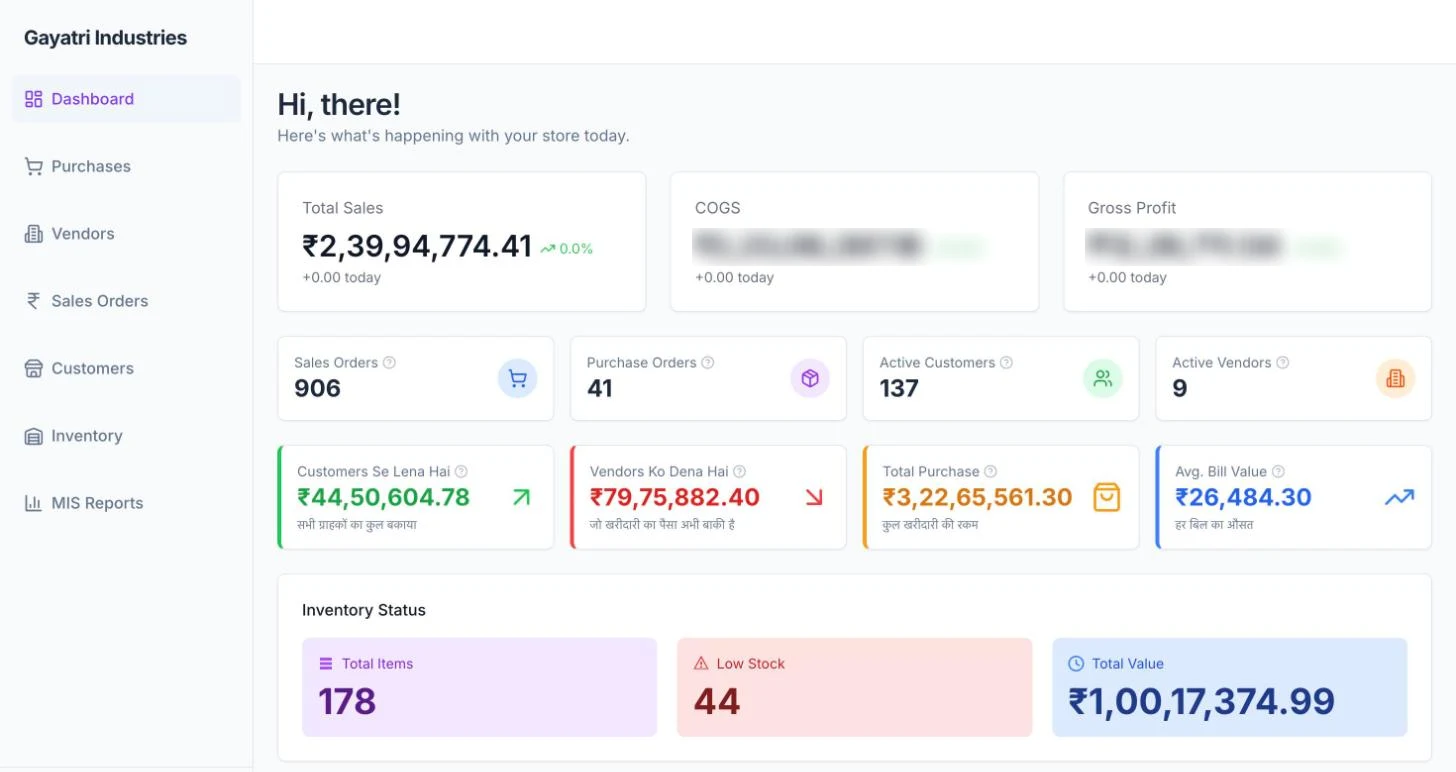
What we builtHindi lines under the figures, like “Customers se lena hai” for money customers still owe.
What it changed: The owner reads the numbers the way he says them.
The result
- of sales billed through it (about $280,000)
- ₹2.4 cr
- of stock tracked live, by weight and by piece (about $115,000)
- ₹1 cr
- owed by customers, tracked to the rupee (about $52,000)
- ₹44.5 lakh
Gayatri has run on it since December 2024, with sales added in January 2025, and renewed support to September 2027. From April to October 2026, ₹2.4 crore (about $280,000) of sales and ₹3.2 crore (about $375,000) of purchases went through it: 906 sales orders for 137 active customers, and 41 purchase orders from 9 suppliers. ₹1 crore (about $115,000) of stock across 178 items is tracked, and ₹44.5 lakh owed by customers and ₹79.8 lakh owed to suppliers are tracked to the rupee. The owner no longer needs a ledger book or a calculator to know what's in stock, who owes what and the profit on every sale.
- No ledger book: the owner sees who owes what, to the rupee, without asking the accountant
- Month-end closes without a calculator: sales, purchases, money in and profit are already added up
- ₹2.4 crore of sales billed through it from April to October 2026
- ₹44.5 lakh owed by customers, tracked to the rupee
Gallery
- Next.jsshadcn/uiStock and accounts panel
- Node.jsExpressMongoDBBackend
- PDFKitBills and account statements
- NetlifyVPS (pm2)Hosting