Logistics software
FMT moves goods for brands across India on its own trucks and through partner carriers. We built the system it runs on, end to end: order intake, booking, manifests, tracking with WhatsApp updates, failed deliveries and returns, proof of delivery, COD remittance, and a report in every client's inbox each morning.
- Logistics software
- Order to proof of delivery
- Daily client MIS
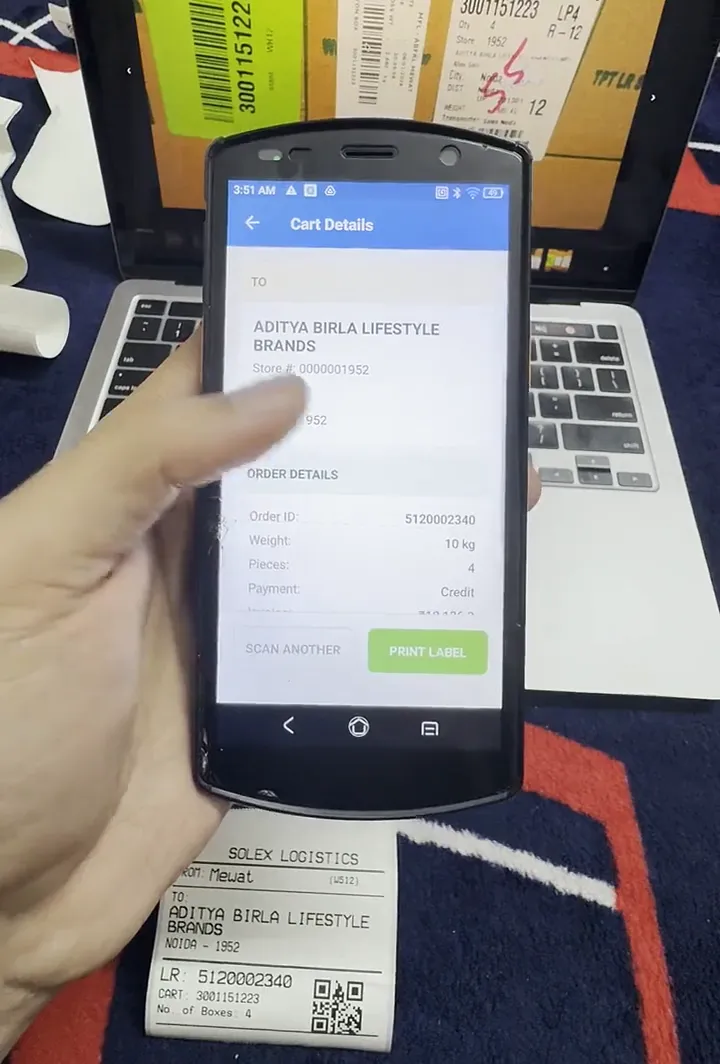
Every box, scanned at the hub
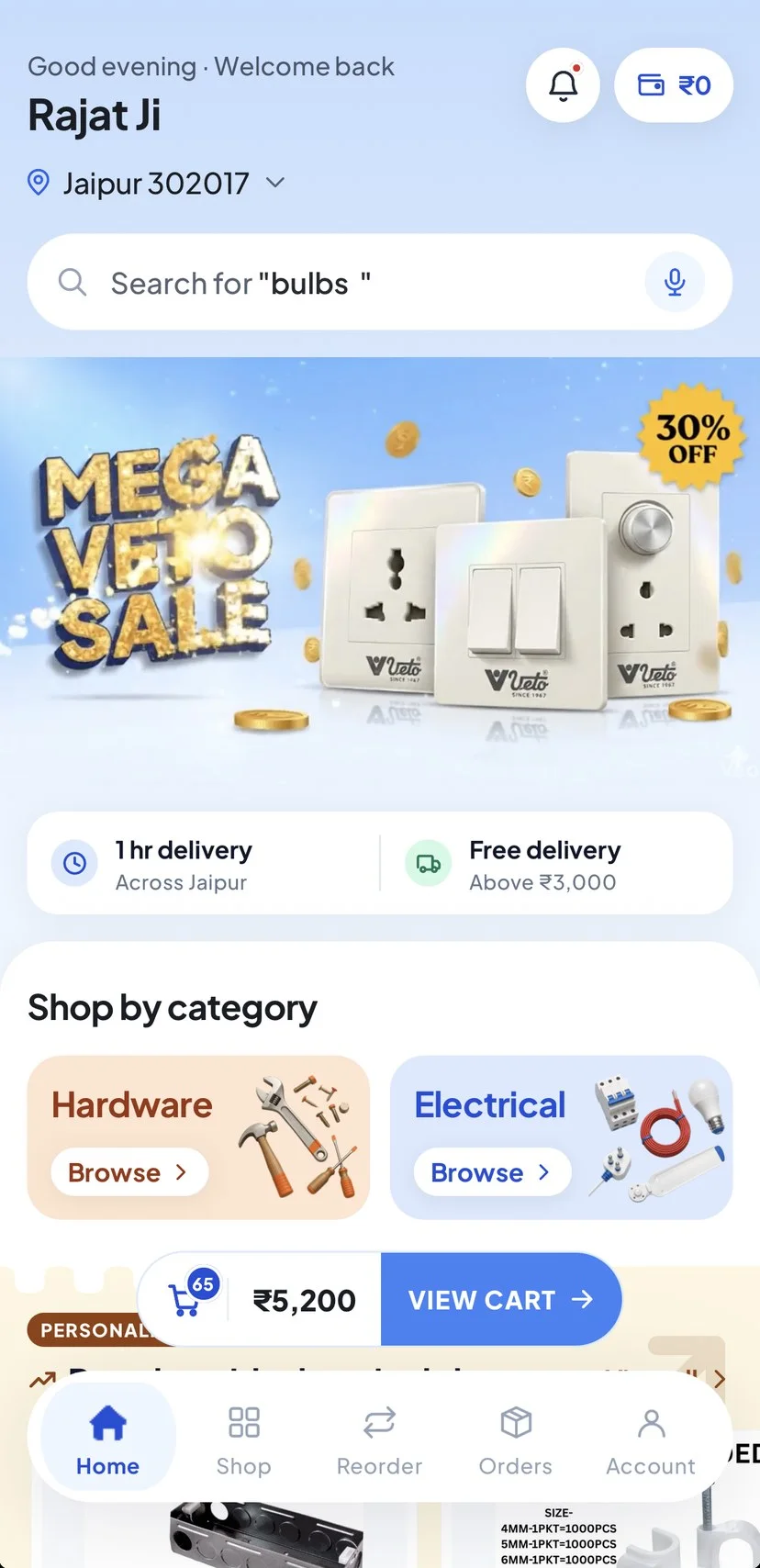
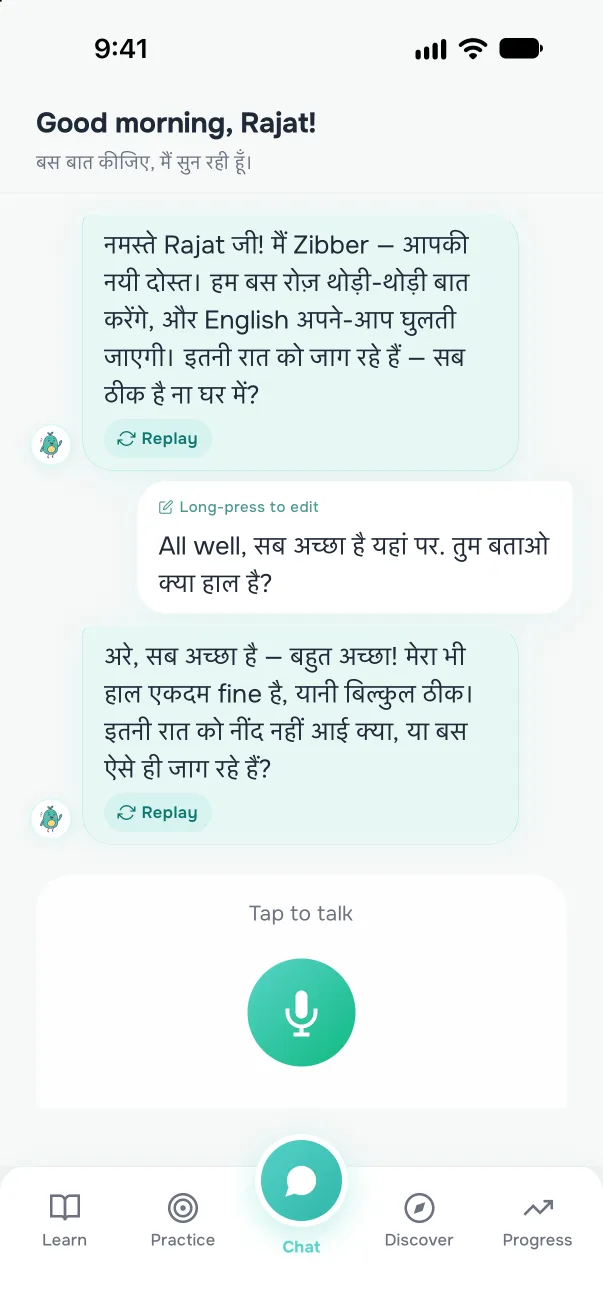
A handheld scanner app: for box-by-box work at the hubs, staff scan each carton in and out and print its label on a Bluetooth printer.
The problem
Every client asked the same thing: where's my order? The answer sat with FMT's own trucks or with one of several partner carriers, each tracked its own way. Clients also wanted a daily report in their own format, proof of delivery when they asked, and their cash-on-delivery money accounted for. All of it took someone's time, every day.
How it works, end to end
Order intake
What we builtOrders come in from FMT's team, typed in or uploaded by CSV, from each client's own panel, from Shopify stores and Unicommerce, and straight from a brand's system through our partner API.
What it changed: Every order lands in the same system, wherever it starts, and FMT's admins get an email for each.
Booking, rates and paperwork
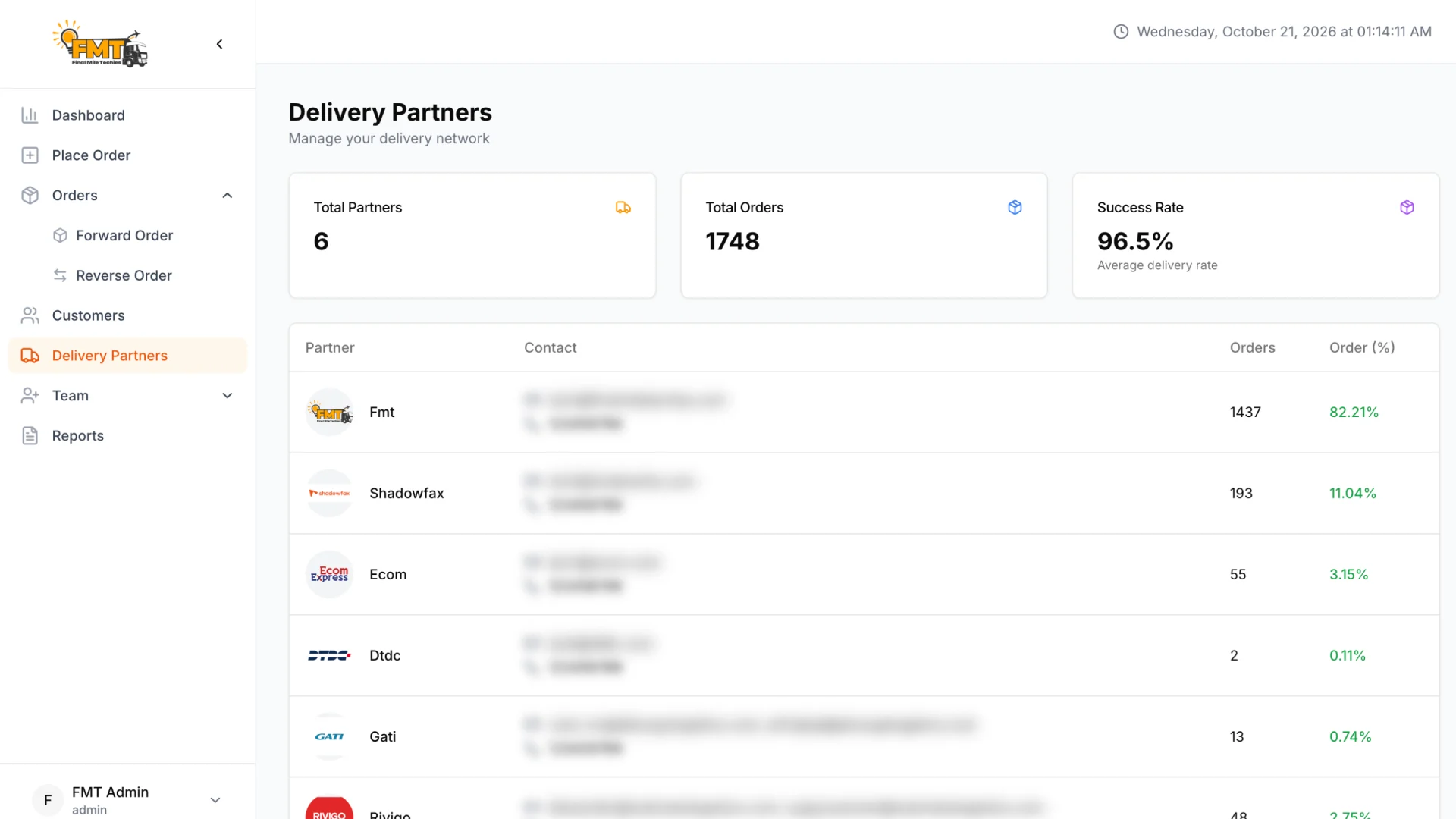
What we builtEach order gets an FMT tracking number, an LR docket and labels, printed one by one or in bulk. A rate card works out freight by pin code and weight, actual or volumetric. The team books FMT's own truck or a connected carrier: Rivigo, Gati, Shadowfax, Ecom Express or DTDC.
What it changed: Five carriers plus FMT's own trucks, booked from one screen, and the freight is known before the truck leaves.
Pickup and manifest
What we builtOrders leaving together go on one manifest for the carrier or FMT's own truck. Every morning the system looks for orders not picked up within 24 hours and emails the carrier and FMT's admins.
What it changed: Every dispatch has its paperwork, and a missed pickup gets chased the next morning without anyone checking by hand.
In transit, with WhatsApp updates
What we builtCarrier hub scans arrive on their own and turn into FMT's own statuses; FMT's trucks are updated in bulk. The customer gets a WhatsApp message when the parcel ships and when it's out for delivery, and FMT is alerted to any order past its expected date.
What it changed: Customers hear about their parcel before they think to call, and late orders surface on their own.
Failed deliveries and returns
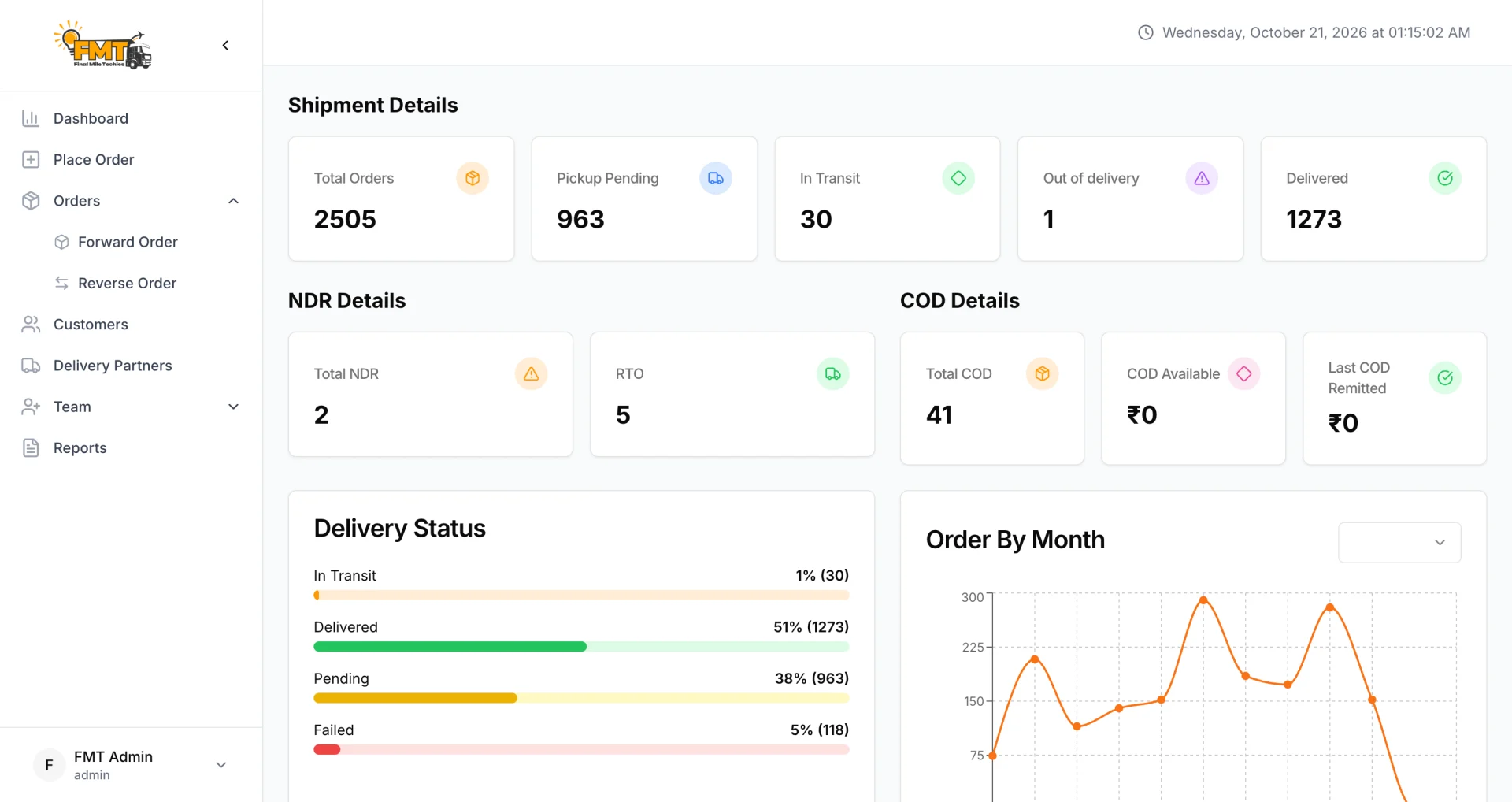
What we builtFailed deliveries (NDR) are marked with a reason, returns to origin (RTO) have their own status, and reverse pickups are booked with the carrier. All of it is counted on the dashboard and in every client's report.
What it changed: Returns stay rare and visible: 5 against 1,273 delivered.
Delivery, POD and COD remittance
What we builtDelivered orders get their proof of delivery, downloadable from FMT's tracking page or through the API. Cash-on-delivery amounts go to the carrier at booking, and the COD collected and remitted is tracked for each client.
What it changed: Clients get their proof and their COD money accounted for, without chasing FMT.
Daily client MIS
What we builtEvery day each client gets an Excel report in their own format: 17 columns, including pickup date and PO number, to as many people as they like.
What it changed: Every client has had an automatic daily report for two years. Nobody puts one together by hand.
Freight billing and margins
What we builtBilled and unbilled freight for each client, and a report of what FMT charged against what each carrier cost, per order and per carrier.
What it changed: The owner sees the margin on every carrier, not just the revenue.
Hub scanning and drivers
What we builtFor box-by-box work there's a hub and driver system: a handheld scanner app that prints each carton's label on a Bluetooth printer, scan-in and scan-out at every hub, and a driver app with a photo proof of delivery and the location captured at pickup and drop.
What it changed: Every carton is accounted for, and hub managers see missing and stuck boxes.
The result
- orders tracked in one system
- 2,500+
- orders delivered
- 1,273
- of orders returned: 5 out of 1,273
- <0.5%
- of automatic daily reports to every client
- 2 years
2,500+ orders have gone through one system: 1,273 delivered, 5 returned to origin, and 57% carried on FMT's own trucks (FMT's dashboard, 21 October 2026). From the first order to the proof of delivery and the COD money, FMT's team and its clients work from the same record.
- Every client has had an automatic daily report for two years
- 5 returns to origin against 1,273 delivered: under 0.5%
- Customers get WhatsApp updates as their parcel moves, and COD money is tracked for every client
Abhinav Singh · Founder · FMTWe run our own trucks and book five carriers, and every client used to ask the same thing: where's my order? kree built the system that runs it end to end, from booking and pickup to proof of delivery, COD and the daily report each client gets in its own format. Fewer than 1 in 200 orders come back to us.
Gallery
- Next.jsshadcn/uiAdmin panel
- ReactViteCustomer panel
- Next.jsPublic website (tracking, pin-code checker)
- Node.jsExpressMongoDBBackend
- React NativeHandheld scanner app (Android, external Bluetooth scanners)
- RivigoGatiShadowfaxEcom ExpressDTDCCarrier APIs
- PDFKitLabels and dockets
- CloudinaryImageKitLabels and proof-of-delivery photos
- VercelHostinger VPSHosting